Yuhang Zhu
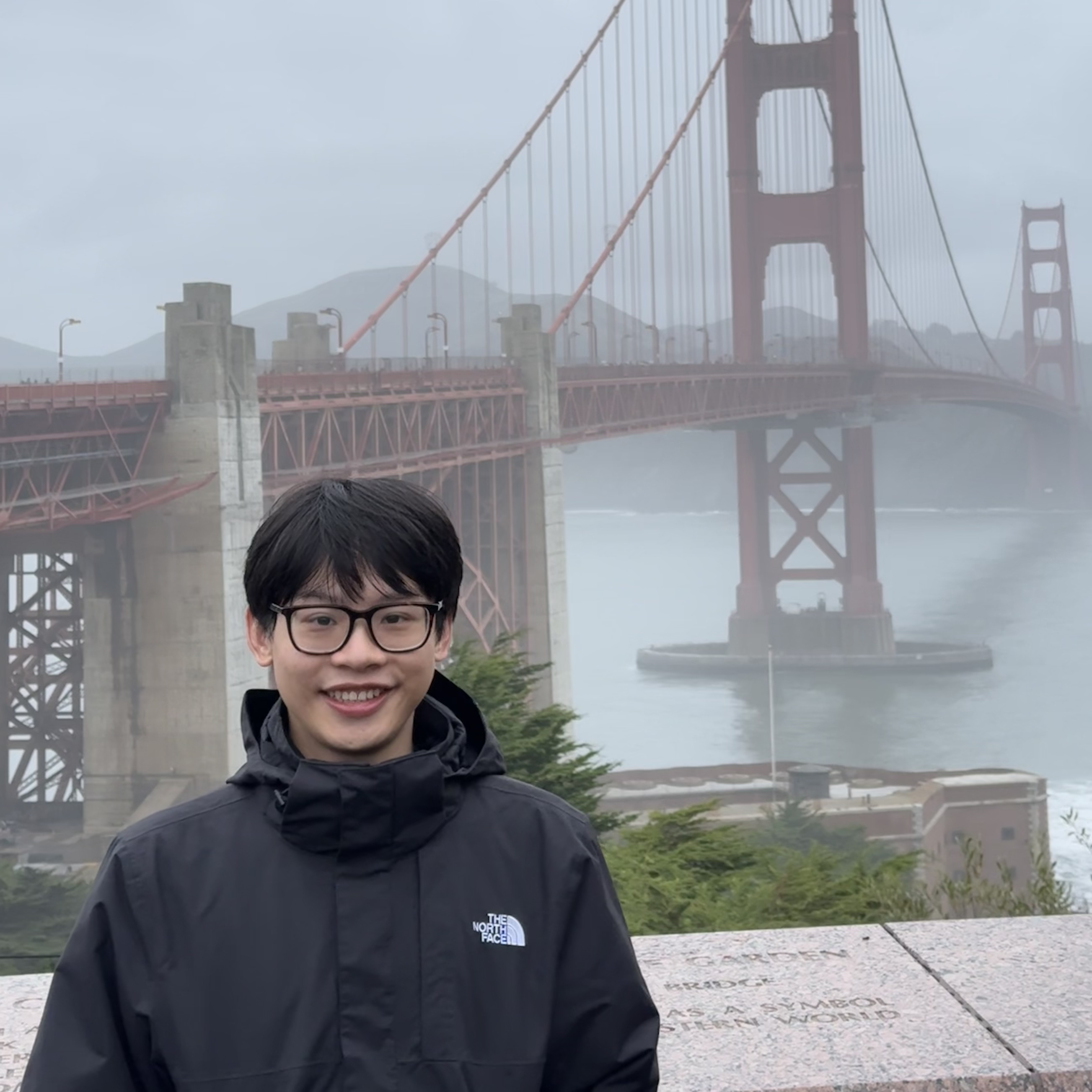
Welcome! I am a PhD student in Political Science at the University of California, Merced. I am also a research affiliate with the Political Economy of Agriculture and Rural Societies (PEARS) lab.
My research examines the political consequences of technological change. I focus on how automation and artificial intelligence shape public attitudes, electoral behavior, and collective action across advanced economies, drawing on causal inference and computational methods.
Prior to UC Merced, I received my BA and MA in Political Science from Nanjing University, China.
Research
Working Papers
Automation Risk, Policy Mapping, and Policy Preferences
Do political preferences change in response to automation risk? Existing observational and experimental studies provide conflicting evidence. This study reconciles these findings by proposing a two-stage framework in which individuals should first perceive automation risk and then map that risk onto concrete policy responses. I test this argument using two preregistered survey experiments in the United States that vary whether automation risk is presented alone or linked to redistribution and regulatory policies. The results indicate that linking automation risk to these policies generally does not shift support, with the exception of increased support for slowing the adoption of new technologies in the workplace. These findings suggest that preference change depends on whether individuals connect risks to policy options, but that this process is conditional on specific policy domains and sensitive to the broader information environment.
Investigating Taluk-Level Data for Colonial South India, 1891–1931
Work in Progress
AI-Assisted Social Science Discovery: An End-to-End Framework for Learning from Unstructured Data
We propose usage of artificial intelligence (AI) algorithms for vision and natural language to assist in discovering potential determinants of human behavior that manual variable selection might miss. Our framework involves training a deep learning algorithm end-to-end to predict a target behavior of interest directly from unstructured data such as imagery and text that provides a naturalistic representation of the agent's decision-making environment. We then use explainable artificial intelligence (XAI) tools to discover underlying relationships learned by the algorithm. We provide information-theoretic grounding for the framework and develop new tools for translating machine-learned into human-interpretable relationships, an interface that becomes important as AI is integrated into social science research workflows. We illustrate how the approach surfaces novel relationships in two cases: understanding how Chinese social media monitors choose what content to censor and how the built environment affects the turnout decisions of Mexican voters.
AI on the Ballot: Is AI a Campaign Issue in the 2026 Midterms?
Bargaining Before Displacement: Labor Responses to Technological Change on the American Waterfront
Why do workers respond differently to labor-saving technological change? This paper develops a theory of labor responses based on the interaction between anticipated distributional threat and workplace power. Their interaction generates four distinct responses to technological change: passive acceptance, atomized adaptation, reactive mobilization, and proactive mobilization. The paper examines proactive mobilization through the diffusion of containerization on the American waterfront, where longshore workers faced a visible threat of displacement while possessing strong workplace organization. Using difference-in-differences designs comparing changes in labor conflict and earnings before and after containerization, the analysis shows that containerization was associated with a relative decline in work stoppages in water transportation, a shift in disputes toward defensive concerns, and later earnings gains among longshore workers who remained in the occupation. These findings highlight bargaining before displacement as an important but less visible form of labor response to labor-saving technological change.
Teaching
University of California, Merced
POLI 003 Introduction to Comparative Politics
POLI 001 Introduction to American Politics
R Bootcamp
POLI 112 Public Policy
POLI 125 Public Opinion
CV
Contact
5200 N. Lake Road, Merced, CA 95343